
Audifort Review 2026: Does It Really Help Hearing?


If you have ever caught yourself saying, “People are mumbling more these days,” or you keep asking others to repeat themselves, or there is that thin ringing that shows up the second your house gets quiet. Yeah. That zone.
Audifort is one of those supplements that shows up with a big promise. Support hearing. Reduce ringing. Clear up mental fog. Help you focus. And it does it with a long ingredient list that leans herbal, amino acid, circulation support, antioxidant support. The whole “ear plus brain” angle.
This review is basically me putting it in its proper place for 2026. What it is. What it is not. What’s plausible. What’s marketing. And how to trial it without lying to yourself about what a supplement can actually do.
Quick Verdict: What Audifort Is (and Isn’t) For in 2026
Audifort is marketed as a natural hearing support supplement, with extra emphasis on cognitive clarity and mental focus. The pitch is basically: your ears are not just “volume knobs.” Hearing clarity depends on circulation, oxidative stress, inflammation, nerve signaling, brain processing, stress response, sleep. So the formula aims at those.
Here’s the key expectation reset.
This is not a hearing aid. It is not medical treatment. It is not going to rebuild a damaged cochlea. And if you are dealing with sudden hearing changes, pain, drainage, vertigo, or one sided symptoms, you do not need a supplement review. You need an ENT or audiologist.
So what does “help hearing” realistically mean in supplement land?
Usually it means some combination of:
- supporting circulation to the inner ear and auditory pathways
- antioxidant support for “cell stress” related to age, noise, inflammation
- supporting relaxation and sleep, which can change how tinnitus feels
- supporting focus and mental clarity, which affects speech comprehension
- helping you feel less “auditory fatigue” in noisy rooms
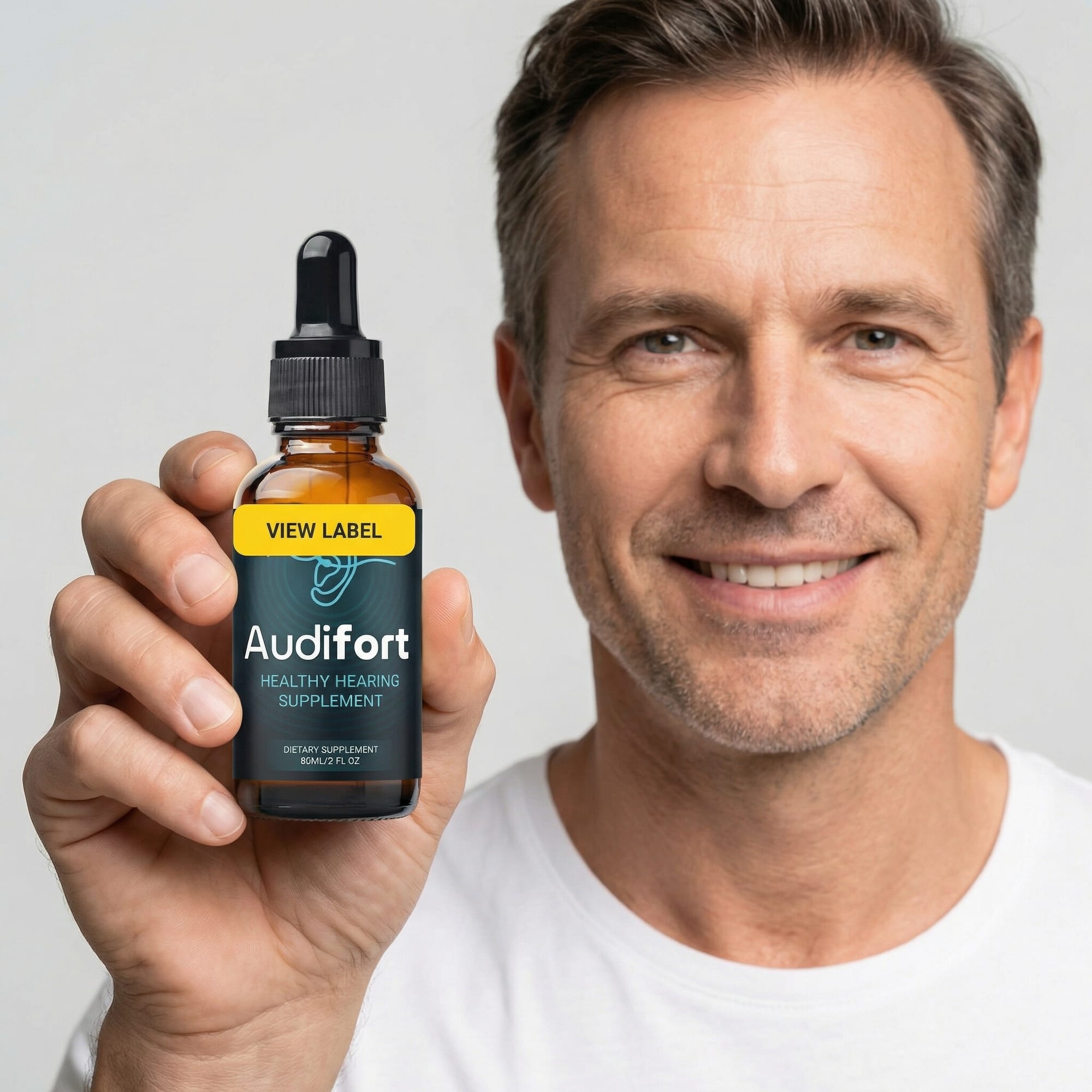
Audifort
Audifort the Herbal Science Breakthrough in Hearing Health
Best fit readers (realistic use cases)
Audifort is most interesting for people who are in the mild to moderate “foggy hearing” zone, like:
- mild hearing clarity concerns, especially speech in noise
- tinnitus or ringing and you suspect stress and sleep make it worse
- age related ear wellness support, not sudden hearing loss
- mental fog, low focus, “I’m drained by the end of the day”
- people who specifically want a USA made, non GMO style supplement and prefer a multi ingredient approach
Not a fit, and please do not gamble here
If any of this is you, skip the supplement experiment and get evaluated:
- sudden hearing loss or sudden major changes
- severe symptoms that are getting worse quickly
- ear infection signs: pain, fever, drainage, swelling
- one sided hearing loss or one sided tinnitus that is new
- vertigo, facial weakness, neuro symptoms
- loud pulsating tinnitus (heartbeat like) that is new
- ear trauma
Visit Auditory Official Site@$49/bottle Only!
What I’ll cover so you can decide intelligently
- ingredients and what each one is doing here
- how it is supposed to work in plain English
- safety and side effects, especially stimulants and interactions
- manufacturing and what “FDA” and “GMP” claims actually mean
- pricing, guarantee, and how to avoid knockoffs
- how to read reviews without getting manipulated
- a realistic timeline and what to track so you can tell if it’s helping
What Audifort Is and What It Claims to Do
Audifort is a hearing support supplement that’s marketed as a holistic formula for ear health and cognitive clarity.
Important: Audifort has been described online in both capsule style products and liquid drop style products. Some current listings in circulation talk about a fast absorbing liquid taken as 2 ml in the morning under the tongue or mixed with a drink. Because packaging can change over time, you should verify the exact format and supplement facts panel from the official product page you are buying from. Do not trust random marketplace images.

Core claims, stated neutrally
Audifort typically claims to support things like:
- healthy auditory function and ear wellness
- reduced ringing or buzzing perception
- improved “auditory clarity” and sound interpretation
- support for auditory nerve and brain communication
- better focus, memory, mental energy, and less brain fog
- stress reduction and relaxation support (which can indirectly affect tinnitus perception)
Also, you’ll see common marketing lines like:
- no prescription needed
- non habit forming
- “works on root causes”
- “life changing results”
Those are marketing claims. Not automatically false, but they are not proof. You still want to look at ingredients, dosing, and your own results.
Guarantee and bonuses
Audifort is often sold with a 90 day money back guarantee (again, verify at checkout). Some bundles may include bonus guides such as:
- The Deep Sleep Activation Protocol
- The Brainwire Regeneration Blueprint
I will talk about whether that stuff matters later. Usually bonuses are just extras, but sometimes the sleep angle is actually relevant for tinnitus sufferers.
The Real Problem: Why Hearing Gets “Foggy” (and Why Tinnitus Happens)
Most people think hearing is just volume. Like turning the TV up fixes it. But clarity is a different thing.
Hearing is a chain:
- sound waves enter the ear
- the inner ear and cochlea convert vibration into electrical signals
- the auditory nerve carries those signals
- the brain processes them, filters noise, pulls speech out of chaos
- attention, memory, stress level, and fatigue decide what you “catch”
So you can have normal volume perception but still struggle with speech in noise. Or you can feel like your ears are “full” or sounds are distorted. Or tinnitus becomes the loudest thing in the room when you are stressed and sleep deprived.

Common contributors (the boring real world stuff)
- Noise exposure over time (work, concerts, earbuds, machinery)
- Age related changes in inner ear structures and neural processing
- Oxidative stress and inflammation, which are involved in many age related tissue changes
- Circulation and vascular health, because the inner ear is metabolically active and sensitive
- Stress and nervous system activation, which can amplify tinnitus perception
- Sleep disruption, which worsens irritability, focus, and tinnitus annoyance loops
None of this means supplements “cure” hearing loss. It means some people experience improvements in comfort, perception, clarity, coping, or fatigue when they support general physiology.
A quick note on tinnitus research
Tinnitus is complicated. The same sound can feel like “barely there” one month and “ruining my life” the next depending on sleep, anxiety, and attention. There is also the brain’s gain control system that can turn the signal up or down. For an in-depth understanding of how our brain processes auditory information and its relation to tinnitus, this research article provides valuable insights.
If you want a reputable place to start learning about hearing loss and tinnitus, the National Institute on Deafness and Other Communication Disorders (NIDCD) has solid patient-friendly information available.
I’m using that kind of source as the baseline for what we know. Supplements are a separate conversation.
How Audifort Is Supposed to Work (Mechanisms in Plain English)
Most hearing supplements, including Audifort, work on a few “support pillars.” Not direct hearing restoration. More like: support the environment your auditory system is operating in.
Here’s how the formula is usually framed, translated into normal language.
Pillar 1: Antioxidant and inflammation support
If oxidative stress and inflammation are part of age related ear and nerve strain, antioxidants are pitched as supportive. Ingredients like grape seed, green tea, grapefruit extract, licorice derived compounds are usually placed here.
Again. Supportive. Not a shield against noise damage. Not a reversal of structural hearing loss. More like “help your cells handle stress.”
Pillar 2: Circulation support
The inner ear depends on blood flow. Some ingredients are included to support circulation signaling and vascular function, like capsicum, coleus forskohlii, ginsengs, and sometimes amino acids that relate to nitric oxide pathways.
This is the “auditory clarity” angle many brands push. The idea is that better circulation support equals better inner ear nourishment.
Pillar 3: Metabolic and blood sugar support
This is where Audifort gets a little unusual, because it includes things like chromium, gymnema, African mango, raspberry ketones. That looks more like a metabolism supplement on paper.
The more charitable interpretation is: metabolic health and stable energy matter for nerves, brain processing, inflammation levels, and overall fatigue. So supporting metabolic balance might indirectly help how you perceive hearing and tinnitus.
But I want to be clear. These are indirect pathways, not “hearing loss treatment.”

Pillar 4: Neurotransmitters, relaxation, and sleep support
Stress and tinnitus can feed each other. GABA and tryptophan are the obvious “calming” choices in this formula. When you calm down, tinnitus often feels quieter. Not because the ear magically changed, but because the brain stops spotlighting it.
This pillar also matters for sleep. And sleep matters for everything, including how much noise you can tolerate.
Pillar 5: Energy and focus support
Audifort also leans into mental energy: guarana, green tea, ginseng, maca, tyrosine, carnitine. That can help some people feel sharper.
But it can also backfire if stimulants spike anxiety or disrupt sleep. That is the tradeoff you need to manage.
The “brain ear communication” concept
This phrase is used a lot because it sounds scientific and it kind of is, in a general sense. Hearing is not just ears. It is ears plus auditory nerve plus brain processing.
If you improve attention, reduce fatigue, sleep better, and reduce stress, you can absolutely experience better speech comprehension. Many people describe that as better hearing. Sometimes it is. Sometimes it is better cognitive processing of sound.
That is not a scam. It is just often oversold.
The limits, stated plainly
Audifort is not an instant hearing restoration product. If you have measurable hearing loss, you might still need hearing aids or medical interventions. A supplement can be an adjunct. Not a replacement.
Audifort Ingredients Breakdown: What Each One Is Doing Here
A quick transparency note before we get deep.
You should verify the exact ingredient list and amounts on the supplement facts label you receive. Formulas can change. Some marketing pages list ingredients without full dosing context. And dosing matters a lot.
Also, the evidence strength varies wildly depending on the ingredient and the claim. Some ingredients have decent data for stress, energy, or metabolic markers. Much less for “tinnitus reduction” directly.
Still, you can map the formula into functional groups.
Antioxidants + Anti Inflammatory Support (Ear + Brain)
Grape seed extract
Grape seed extract is rich in proanthocyanidins and is generally used for antioxidant and vascular support. In hearing supplement logic, it’s included to support oxidative stress defense and circulation, which could theoretically help inner ear tissues and overall vascular function.
Caveat: if you take blood thinners or have clotting disorders, always discuss herbal extracts with a clinician. Many antioxidant polyphenols can have mild blood related effects.
Don't Miss Out Audifort Limited Time Offer
Green tea leaf extract
Green tea is an antioxidant source, and it can support alertness. Depending on the extract, it may contain caffeine and catechins.
Why it’s here: antioxidant support plus mental clarity angle.
Caveat: if you are caffeine sensitive, it can worsen anxiety, jitteriness, and sleep. And sleep is a big piece of tinnitus perception.
Grapefruit fruit extract
Grapefruit brings antioxidant positioning and vitamin C style marketing.
Big caveat: grapefruit is famous for interacting with certain medications by affecting enzymes involved in drug metabolism. This is not “rare.” It’s a known thing. If you take prescription meds, especially certain cholesterol, blood pressure, anxiety, or immune meds, ask your pharmacist or doctor before using grapefruit containing supplements.
Monoammonium glycyrrhizinate (licorice derivative)
This is derived from licorice and is usually positioned as soothing and supportive for inflammation and immune response.
Caveat: licorice compounds can be relevant to blood pressure and potassium levels depending on form and dose. Not everyone reacts the same. But if you have hypertension, heart issues, kidney issues, or you are on diuretics, this ingredient should make you pause and verify safety.
Circulation + “Auditory Clarity” Support
Capsicum annuum fruit extract
Capsicum is the “spicy” circulation support angle. It can promote a warming sensation and is often used in thermogenic formulas.
Why it’s here: circulation support narrative and metabolic energy.
Caveat: it can irritate sensitive stomachs, and some people just do not tolerate it well.
Coleus forskohlii root extract
Coleus forskohlii is used for forskolin, often marketed for metabolism and signaling pathways (cAMP). In supplement land it sometimes shows up in circulation and body composition blends.
Why it’s here: circulation and metabolic signaling narrative.
Caveat: it can affect blood pressure and interact with medications. If you are on blood pressure meds, anticoagulants, or have cardiac concerns, you want medical guidance before combining.
Panax ginseng aerial extract
Panax ginseng is a classic adaptogen style ingredient, used for energy, fatigue, and stress resilience.
Why it’s here: mental energy, stress support, possibly circulation support.
Caveat: can be stimulating for some. Also caution with blood pressure meds, blood thinners, and certain mental health meds.
Siberian ginseng root extract (Eleuthero)
Often used for stamina and stress adaptation.
Why it’s here: energy, resilience, fatigue support.
Caveat: still a stimulating adaptogen for many. Not always ideal for anxiety prone users.
Raspberry ketones
This one is mostly known from weight management marketing. The best way to interpret its presence in Audifort is that the product is partly a metabolic energy formula, and the brand is connecting metabolic health to nerve and ear performance.
Caveat: keep expectations conservative. This is not a tinnitus ingredient. It is a “supporting general vitality” ingredient at best.
Metabolic + Blood Sugar Support (Why It Might Matter for Nerves)
This section is where people get confused, because it looks like a diet supplement.
My take: if the brand is targeting older adults with brain fog, fatigue, and “hearing decline,” they’re going after system wide metabolic support and inflammation, not just ear specific pathways.
Still, these are indirect.
Chromium picolinate
Chromium is used to support glucose metabolism. Stable blood sugar can relate to energy, mood, and nerve function indirectly.
Caveat: if you are diabetic or on glucose lowering meds, do not stack blood sugar support supplements casually. You can overshoot.
Gymnema leaf extract
Gymnema is traditionally used for blood sugar support and reducing sugar cravings.
Caveat: again, medication interactions matter here, especially for diabetes meds.
African mango seed extract
Often marketed for weight management, appetite, and metabolic markers.
Relevance to hearing: indirect. If weight and inflammation are part of your health picture, improving metabolic health can help general inflammation and energy.
Caveat: do not buy into “hearing cure” narratives from this. It’s systemic support at most.
Neurotransmitters + Amino Acids (Relaxation, Focus, Brain Fog)
GABA (gamma aminobutyric acid)
GABA is a calming neurotransmitter. Supplemental GABA is marketed for relaxation and stress reduction.
Why it’s here: tinnitus perception often spikes when stress spikes. Calming support can reduce the “alarm response” to tinnitus, which makes it feel quieter or less intrusive.
Caveat: GABA can make some people sleepy. Or weirdly, it can make others feel off. Start cautious.
L tryptophan
Tryptophan is a precursor to serotonin and melatonin pathways.
Why it’s here: mood and sleep support, which can indirectly help tinnitus coping and mental clarity.
Caveat: do not combine tryptophan casually with certain antidepressants or serotonin affecting meds without medical guidance.
Beta alanine
Beta alanine is usually used for exercise performance. Some people feel tingling (paresthesia), which is normal for beta alanine and dose dependent.
Why it’s here: general energy and endurance angle.
Caveat: tingles can freak people out if they do not expect it.
L ornithine HCL
Ornithine is associated with the urea cycle and is marketed for fatigue and recovery.
Why it’s here: stress and fatigue support narrative.
Caveat: generally well tolerated, but still, monitor how you feel.
L carnitine base
Carnitine supports fatty acid transport in energy metabolism and is used for fatigue and cognitive energy in some contexts.
Why it’s here: energy support and “brain fog” angle.
Caveat: can cause GI upset for some users.
L tyrosine
Tyrosine is a precursor for catecholamines (dopamine, norepinephrine) and is often used for focus under stress.
Why it’s here: focus, cognitive resilience, mental sharpness.
Caveat: can be stimulating, and may not be ideal if you are prone to anxiety, panic, or insomnia.
L glutamine (if included on your label)
Some Audifort ingredient lists include L glutamine.
Why it’s here: general brain and gut support positioning, recovery, stress support.
Caveat: context matters. If you have liver disease or specific metabolic disorders, amino acid supplementation should be clinician supervised.
L arginine (if included on your label)
Some lists mention L arginine.
Why it’s here: nitric oxide support for blood flow and circulation, which ties into the inner ear circulation narrative.
Caveat: can interact with blood pressure meds, erectile dysfunction meds, and may not be appropriate for certain conditions. Again, verify if it is actually in your version.
Energy + Adaptogens (Mental energy without the crash?)
Guarana seed extract
Guarana is a caffeine source. Full stop.
Why it’s here: energy, focus, mental drive. Also helps the product feel like it “works” early because caffeine is noticeable.
Warning: caffeine can worsen tinnitus for some people and improve it for others. It can also worsen anxiety and insomnia. If tinnitus is already tied to stress and sleep, be careful with stimulants.
Maca root extract
Maca is typically used for vitality, mood, and energy support.
Why it’s here: vitality and hormonal energy marketing angle.
Caveat: effects are subtle and individual.
Stimulant stacking issue
Audifort can include multiple “up” ingredients at once: guarana plus green tea plus ginsengs plus tyrosine.
For some people, that feels amazing. For others, it is jittery and sleep wrecking. If you already have tinnitus, poor sleep can ruin the whole experiment because it makes everything feel worse.
What the Science Actually Says (and What It Doesn’t)
This is the part where most supplement reviews get weird. They either pretend clinical proof exists. Or they trash everything as placebo.
The honest middle is this:
1) Clinical evidence for supplements directly “fixing hearing loss” is limited
For age related hearing loss and many tinnitus cases, there is no universal supplement that reliably restores hearing. If a product claims it “restores hearing naturally,” treat that as marketing.
2) There is some rationale for support pathways, not proof of outcome
Research interest exists around:
- antioxidants and oxidative stress
- vascular function and circulation
- inflammation modulation
- stress reduction, sleep quality, nervous system tone
- cognitive attention and auditory processing
Those are plausible pathways where supporting overall health could change how someone experiences hearing clarity and tinnitus annoyance.
But plausible is not proven.
3) User reports are real, but they are not controlled evidence
Some people will report:
- less ringing
- less ear pressure or fullness sensation
- clearer conversations
- better focus, energy
- calmer mood and better sleep
Others will report nothing. Or side effects from stimulants.
Also, tinnitus is highly sensitive to placebo and nocebo effects, and to attention. When you track symptoms obsessively, sometimes they feel worse. When you sleep better and feel safer, symptoms often reduce.
Use reputable sources for the basics
For hearing loss and tinnitus education, NIDCD is a good baseline resource. It won’t tell you “buy Audifort.” It will help you understand what’s normal, what’s not, and when to seek evaluation.
My Expected Results Timeline (Realistic) and What to Track
If you try Audifort, do not do the thing where you take it randomly, forget half your doses, and then decide it “didn’t work.”
Also do not do the thing where you interpret every random good day as proof it is magic.
Track it. Lightly. Like a grown up.
What to track (simple but useful)
- Tinnitus loudness (0 to 10)
- Tinnitus annoyance (0 to 10) because loudness and distress are different
- Speech clarity in noise notes (restaurants, TV, group conversations)
- Mental clarity (0 to 10)
- Energy (0 to 10)
- Sleep quality (hours plus “rested?” yes/no)
- Stress level (0 to 10)
Do a baseline for 3 days before starting, if you can.
Week 1 to 2: tolerance and early signals
This is where you mainly learn:
- does it make you jittery or calm
- does it help or hurt sleep
- any GI irritation (capsicum, extracts)
- any tingling sensations (beta alanine)
- any changes in tinnitus perception, even if small
If you are stimulant sensitive, this is when you’ll know.
Weeks 3 to 6: consistency window
This is where you look for trends:
- are conversations less exhausting
- are you asking “what?” less often
- does ringing feel less intrusive
- are you less mentally foggy
- are you sleeping better overall
This is also where lifestyle matters. If you are in loud environments daily and sleeping 5 hours, supplements are not going to save you.
Weeks 8 to 12: decision time
By this point, you should be able to compare your baseline notes.
If you have measurable hearing loss concerns, consider doing a hearing test around this period. Sometimes what you need is just information, and maybe hearing aids. And that’s not defeat. It’s clarity.
If symptoms worsen, stop and talk to a clinician. Especially if anything becomes sudden, one sided, or associated with vertigo or neuro symptoms.
How to Use Audifort (Dosage, Routine, and Best Practices)
Because the product format can vary, you must follow the label directions on your bottle or the official product insert.
That said, some current Audifort marketing describes a liquid format with a 2 ml morning dose, taken under the tongue or mixed with water or juice.
Timing matters with this formula
Audifort contains ingredients that pull in opposite directions.
- “up” ingredients: guarana, green tea, ginseng, tyrosine
- “down” ingredients: GABA, tryptophan, ornithine
So, in practice:
- If you are sensitive to caffeine, take it earlier in the day.
- If it affects your sleep, do not take it late.
- If you feel too calm or sleepy, avoid taking it before driving until you know your response.
Routine best practices
- take it consistently, same time daily
- do not stack extra caffeine on top during the first week
- hydrate, especially if stimulants increase urination or jitteriness
- avoid adding multiple new supplements at once or you will not know what caused what
What not to combine casually
General caution categories:
- other high caffeine products (pre workouts, fat burners, energy drinks)
- multiple blood sugar lowering supplements if you are on diabetes meds
- grapefruit containing products if you are on medications with known grapefruit interactions
- mood and sleep supplements plus tryptophan if you take antidepressants or similar meds
If you are on prescriptions, the safest move is asking a pharmacist. They are extremely good at interaction checks.
Safety, Side Effects, and Who Should Avoid It
Supplements can still cause side effects. Especially multi ingredient blends.
Potential side effects to watch for
- jitteriness, anxiety, fast heartbeat (guarana, green tea, ginseng, tyrosine)
- insomnia or lighter sleep (stimulants)
- sleepiness (GABA, tryptophan)
- stomach irritation, reflux (capsicum, certain herbal extracts)
- tingling (beta alanine)
- blood sugar shifts (chromium, gymnema)
- blood pressure changes (ginseng, coleus, licorice derivatives depending on form)
Groups who should be cautious
Talk to a clinician first if you are:
- pregnant or breastfeeding
- taking anticoagulants or antiplatelet meds
- dealing with hypertension or arrhythmias
- on diabetes medications or prone to hypoglycemia
- anxiety, panic disorder, insomnia history
- liver or kidney conditions
- taking antidepressants or serotonin affecting medications (tryptophan caution)
- on any medication with grapefruit interaction risk
Red flag symptoms that require medical care
Do not try to “supplement through” these:
- sudden hearing loss
- severe vertigo or balance issues
- one sided tinnitus with new neuro symptoms
- ear pain, drainage, fever
- pulsatile tinnitus that is new or worsening
Manufacturing, Quality, and “FDA/GMP” Claims (What They Mean)
You will see language like “FDA approved” or “FDA compliant facility.”
Here is the clean truth:
- Dietary supplements are not FDA approved like prescription drugs.
- The FDA does regulate supplements in terms of labeling rules and manufacturing oversight, and it can take action against unsafe or mislabeled products.
- When a brand says “made in an FDA compliant facility,” they usually mean the facility follows certain regulatory manufacturing requirements. It does not mean the product was reviewed and approved for effectiveness.
What GMP means
GMP stands for Good Manufacturing Practices.
If Audifort is made in a GMP certified facility, that generally suggests:
- quality controls in manufacturing
- ingredient handling procedures
- sanitation, record keeping, consistency standards
What it does not guarantee:
- that the supplement will work for your tinnitus or hearing clarity
- that every claim on the marketing page is clinically proven
- that the product has third party testing (unless stated)
What I would look for, as a buyer
- a full supplement facts label with dosages
- transparent manufacturer information
- third party testing or a COA (certificate of analysis), if available
- a clear refund policy in writing
- a clear official website purchase path
If the product is associated with a developer name (commonly mentioned: Andrew Ross), still verify brand details yourself. Names in marketing do not always equal accountability.
Audifort Pricing, Packages, and Refund Policy (2026 Check)
Pricing changes, so treat this as a “typical structure” and verify at checkout.
A common Audifort bundle setup looks like:
- 2 bottles: around $79 per bottle, plus shipping
- 3 bottles: around $59 per bottle, often free shipping, often bonuses
- 6 bottles: around $49 per bottle, often free shipping, often bonuses
Cost per day (rough math)
If a bottle lasts about 30 days (verify), then:
- $79 per month is $2.63 per day
- $59 per month is $1.97 per day
- $49 per month is $1.63 per day
That’s just to help you think. Not a promise.
Refund policy
Audifort often comes with a 90 day money back guarantee.
When you see “90 days,” it’s important to clarify:
- whether the clock starts at the purchase date or delivery date
- where returns must be shipped
- whether you need to return empty bottles or just provide proof of purchase
- the exact support email and process for returns
Avoiding knockoffs
To ensure that the guarantee is valid, it's usually safest to buy from the official website. Marketplaces can sometimes have outdated versions, tampered products, or sellers who vanish when you request a refund.
Additionally, if you come across a deal that seems too cheap, it often is.
Bonuses
If bonuses like a sleep protocol or “brainwire blueprint” are included, consider them as optional. However, if sleep is a significant issue for you, the habit changes suggested in those guides might actually be more beneficial than one or two ingredients.
Customer Reviews and Testimonials: How to Read Them Without Getting Fooled
Navigating through supplement reviews online can be quite challenging. Some are genuine, some are not, and others may be authentic but written in a way that sounds insincere due to the use of copied marketing phrases.
Here’s my approach to reading them effectively.
What’s useful in a review
When evaluating reviews, I look for specific elements:
- baseline issue: “ringing at night for 3 years,” “speech in noise,” “mental fog at 3 pm”
- timeline: “noticed sleep changes in week 2,” “ringing less annoying by week 5”
- consistent usage: daily, not random
- mention of other changes: earwax removal, hearing aids, stress work, magnesium, cutting caffeine
- specific outcomes: “TV volume down 2 notches,” “less panic at bedtime,” “less drained after meetings”
It's also helpful to read about real user experiences with other supplements such as Berberine, which can provide valuable insights into their effectiveness and potential side effects.
What I ignore
- miracle cures in days
- identical phrasing across multiple reviews
- no timeframe
- no context
- extreme medical claims like “reversed hearing loss completely”
Balanced takeaway
Testimonials can tell you whether people feel satisfied. They do not prove clinical efficacy. Still, they can help you predict what the product is more likely to do.
For Audifort, the most believable positive outcomes are:
- less tinnitus distress
- slightly improved clarity and less “auditory fatigue”
- better energy and mental sharpness
- improved sleep if stimulants do not interfere
Audifort vs Common Alternatives (What to Consider Instead)
If you are deciding between “supplement” and “real solution,” here’s the honest hierarchy.
Hearing aids vs supplements
If you have measurable hearing loss, hearing aids can be life changing. Not even dramatic. Just practical. Better conversations. Less isolation. Less brain strain.
Supplements do not replace amplification and signal processing. They might support comfort and cognitive energy, but they do not do what hearing aids do.
Other supplement angles (general, not a pitch)
Some people explore:
- magnesium (often discussed for stress, sleep, muscle tension)
- B vitamins (general nerve support)
- standalone antioxidant formulas
- ginkgo style circulation products (mixed evidence and variable response)
If you try Audifort, you are basically choosing a “kitchen sink” stack rather than a targeted single nutrient approach.
Non supplement steps that matter a lot
- get a hearing test. seriously. it is data.
- check earwax with a professional if you suspect buildup
- protect your ears around loud noise
- manage sleep and stress, because tinnitus is reactive to both
- reduce constant earbud use at high volume
In many cases, these steps produce clearer changes than any capsule or drop.
Who Should Try Audifort (Use Case Scenarios)
This is the part where the product makes more sense, because it’s not one audience. It’s a blend.
Scenario 1: mild ringing or buzzing plus stress and sleep disruption
If your tinnitus is strongly tied to stress, and you can tell it spikes when you sleep poorly, Audifort’s calming and antioxidant logic is at least directionally relevant.
But if the stimulants worsen sleep, it could backfire. So you need to watch that.
Scenario 2: “My hearing is fine, but speech is unclear”
This is super common. Often it’s hearing in noise, auditory processing, attention, fatigue. It can also be early hearing loss that you have not measured yet.
Best move: hearing test. Then decide.
If the issue is more brain strain and focus, the cognitive energy ingredients might help you feel sharper during conversations. Again, that’s not “curing hearing.” It’s supporting processing.
Scenario 3: mental fog plus low energy
Audifort is honestly closer to a “vitality plus focus” supplement than people admit. If you feel foggy, low drive, tired, the adaptogens, caffeine, tyrosine, carnitine could be noticeable.
But if you are anxiety prone, it might be too much.
Scenario 4: prevention mindset
If you want long term auditory wellness support, a supplement can be part of a routine. Antioxidants plus lifestyle plus noise protection plus sleep.
Just do not pretend prevention means invincibility. Protect your ears. That’s still the main lever.
Final Take: Does Audifort Really Help Hearing?
Audifort can plausibly help some people feel better in the hearing and tinnitus zone, mostly through supporting circulation, antioxidant defense, stress response, sleep quality, and cognitive energy. That combination can make conversations feel easier and ringing feel less intrusive.
But there is no strong reason to believe it will restore hearing loss in the medical sense, especially if you have significant cochlear damage or measurable hearing decline that needs amplification.
If you want to try it in 2026, the most reasonable approach is a risk managed trial:
- verify the supplement facts label and format (drops vs capsules)
- start cautiously if you are stimulant sensitive
- track tinnitus annoyance, clarity in noise, sleep, and energy
- use the 90 day guarantee window responsibly
- and if you have red flag symptoms or measurable loss, get evaluated anyway
If you do one thing after reading this, do this: check the official site for the current ingredient label, dosing instructions, and refund terms. Then decide if you are the right kind of “mild to moderate clarity and tinnitus perception” user. Or if you need medical care and a hearing test first.
FAQ: Audifort Review 2026
Does Audifort really help hearing?
It may help some people with perceived clarity, less auditory fatigue, and reduced tinnitus annoyance, mainly through stress, circulation, antioxidant, and focus support. It is not proven to restore hearing loss and it does not replace hearing aids.
How long does Audifort take to work?
Many people evaluate supplements like this over 30 to 90 days. Week 1 to 2 is mostly tolerance and side effects, weeks 3 to 6 for trend changes, and by weeks 8 to 12 you should know if it is worth continuing.
Is Audifort good for tinnitus?
It might help with tinnitus perception for some people, especially if stress and sleep strongly influence their symptoms. But tinnitus is highly individual, and no supplement works for everyone.
Is Audifort a hearing aid alternative?
Not really. If you have measurable hearing loss, hearing aids address amplification and sound processing directly. Audifort is a wellness supplement that may support comfort and cognitive processing, not replace medical devices.
Does Audifort have caffeine?
It may, because guarana and some green tea extracts contain caffeine. Check your label. If you are caffeine sensitive or insomnia prone, this matters.
What are the most important ingredients in Audifort?
From a “hearing plus brain” logic standpoint, people usually focus on the antioxidant and circulation ingredients (grape seed, green tea, ginsengs, capsicum) and the calming and focus ingredients (GABA, tryptophan, tyrosine). But dosing is everything, so verify amounts.
Are there side effects?
Possible side effects include jitteriness, anxiety, insomnia, stomach irritation, tingling (beta alanine), blood sugar shifts (chromium, gymnema), and potential blood pressure effects (ginseng, coleus, licorice derivatives). Stop if you react poorly and consult a clinician if needed.
Who should not take Audifort?
People who are pregnant or breastfeeding, those on anticoagulants, people with uncontrolled hypertension, those on diabetes medications without supervision, anyone with anxiety or insomnia sensitivity to stimulants, and people on medications with grapefruit interaction risks should talk to a clinician first.
Is Audifort FDA approved?
Dietary supplements are generally not FDA approved like drugs. Brands may say made in an FDA compliant facility, which is different. Verify the exact wording and understand it refers to manufacturing rules, not proven effectiveness.
Where should I buy Audifort to avoid fake bottles?
Usually the safest option for authenticity and the 90 day guarantee is the official website. Avoid deals that look unusually cheap on marketplaces.
What should I do if I have sudden hearing loss or one sided tinnitus?
Seek medical care promptly. Sudden hearing loss and certain one sided symptoms can be urgent and are not appropriate for self treating with supplements.
FAQs (Frequently Asked Questions)
What is Audifort and what does it claim to do?
Audifort is a natural hearing support supplement designed to promote optimal ear health and cognitive clarity. It claims to support healthy ear function, reduce ringing or buzzing in the ears (tinnitus), improve auditory signal clarity, and enhance brain-ear communication for better mental sharpness and stress reduction.
Who is the ideal user for Audifort?
Audifort is best suited for individuals experiencing mild hearing clarity concerns, tinnitus or ringing in the ears, mental fog, or age-related ear wellness issues. It appeals especially to those seeking USA-made, non-GMO natural hearing supplements as an alternative or complement to hearing aids.
Can Audifort replace hearing aids or medical treatment for severe hearing loss?
No. Audifort is a dietary supplement intended to support normal ear function and cognitive clarity. It is not a substitute for hearing aids or professional medical care. People with sudden hearing loss, severe symptoms, ear infections, one-sided hearing loss, vertigo, drainage, or pain should consult an ENT specialist or audiologist.
How does Audifort work to support ear health and cognitive function?
Audifort works through multiple support pillars including antioxidant protection against oxidative stress, circulation support to improve blood flow in the ears, metabolic support for healthy cellular function, neurotransmitter and relaxation support to calm brain response to sound, and energy/mental focus enhancement. Its herbal ingredients like grape seed extract, green tea leaf extract, astragalus root extract, grapefruit fruit extract, and monoammonium glycyrrhizinate contribute to these effects.
What are the key ingredients in Audifort and their benefits?
Key ingredients include grape seed extract (antioxidant and vascular support), green tea leaf extract (antioxidants and mild stimulant for focus), astragalus root extract (anti-inflammatory and immune adaptogen), grapefruit fruit extract (general antioxidant with caution due to medication interactions), and monoammonium glycyrrhizinate (licorice derivative with soothing anti-inflammatory properties). These plant-based components work synergistically to support ear health and cognitive clarity.
Is Audifort safe and does it come with any guarantees?
Audifort is made in the USA using non-GMO ingredients following GMP manufacturing standards. It is marketed as safe and non-habit forming. The product typically includes a 90-day money-back guarantee allowing users to try it risk-free. However, individuals should review ingredient interactions (e.g., grapefruit) and consult healthcare providers if needed before use.


