
InsuLeaf Review: What I Noticed After 30 Days


Blood sugar stuff is weirdly emotional.
It’s not just numbers. It’s that 3pm crash where you suddenly want something sweet and salty at the same time. It’s the “why am I tired after I ate” feeling. It’s the low key anxiety that maybe you are messing up your health and you can’t quite tell, because you’re functioning, technically. Just a little foggy. A little snacky. A little irritable for no good reason.
So I tried InsuLeaf for 30 days. Not as a miracle fix. More like, ok, let’s see if a legit blood sugar support supplement can actually make day to day life feel steadier.
This is everything I noticed, what I didn’t notice, what I think the formula is trying to do, and how I’d decide if it’s worth your money.
Quick take: who InsuLeaf seems best for (and who should skip it)
First, expectations.
InsuLeaf is a nutrition based blood sugar support supplement. It is not medication. It is not a replacement for diabetes treatment. It’s more like an “assist” for metabolic wellness, the kind of product that might make the spikes and dips feel less dramatic if the rest of your life is at least somewhat supportive.
And yes, results vary a lot based on baseline diet, sleep, stress, and activity. If you’re living on ultra processed snacks and sleeping 5 hours, a supplement isn’t going to outwork that.
Who it may fit
InsuLeaf seems best for people who:
- Want steadier energy, especially fewer post meal crashes.
- Deal with sugar cravings or snacky appetite swings.
- Are trying to support insulin sensitivity and glucose metabolism alongside lifestyle changes.
- Want a multi ingredient approach instead of a single mineral like chromium alone.
Basically. The “I’m not trying to cure anything, I just want to feel more stable” crowd.
Who should avoid it or ask a clinician first
If any of these apply, don’t guess. Talk to a clinician first:
- Pregnant or breastfeeding.
- On diabetes meds or insulin (hypoglycemia risk is real when you stack support products with glucose lowering meds).
- On anticoagulants or blood thinners.
- History of liver or kidney issues.
- Sensitive to botanicals or have allergies to plant extracts.
Even if you’re generally healthy, if you’ve got medical stuff going on, it’s just smarter to run it by someone who knows your full picture.
What I’ll cover in this review
- My 30 day experience (week by week).
- The ingredient science in plain English.
- Quality and manufacturing, what’s worth verifying.
- Pricing and guarantee, and whether it felt worth it to me.
- Where to buy safely and how to avoid sketchy bottles.
- How InsuLeaf compares to other blood sugar supplements.
What InsuLeaf is (and what it claims to do)
InsuLeaf is a nutraceutical supplement. Capsule based. Designed to support healthy blood sugar regulation using a multi ingredient, multi pathway formula.
The marketing language usually talks about “metabolic balance” and “blood sugar support” and “insulin sensitivity
.” Here’s what that tends to mean in normal person terms:
- Carbohydrate digestion modulation: helping your body handle carbs more smoothly after meals.
- Glucose transport support: supporting how glucose gets used and moved into cells.
- Oxidative stress reduction: lowering some of the metabolic stress that tends to come along with blood sugar swings.
- Insulin sensitivity support: helping your body respond more effectively to insulin.
The realistic outcome markers people often notice (if they notice anything) are not dramatic. It’s more like:
- Fewer sugar cravings.
- More stable afternoon energy.
- Less post meal heaviness and crash.
- A slightly calmer appetite.
Not “curing diabetes.” Not “melting fat off.” Not “instantly stabilizing glucose forever.” If a supplement promises that, you should run.
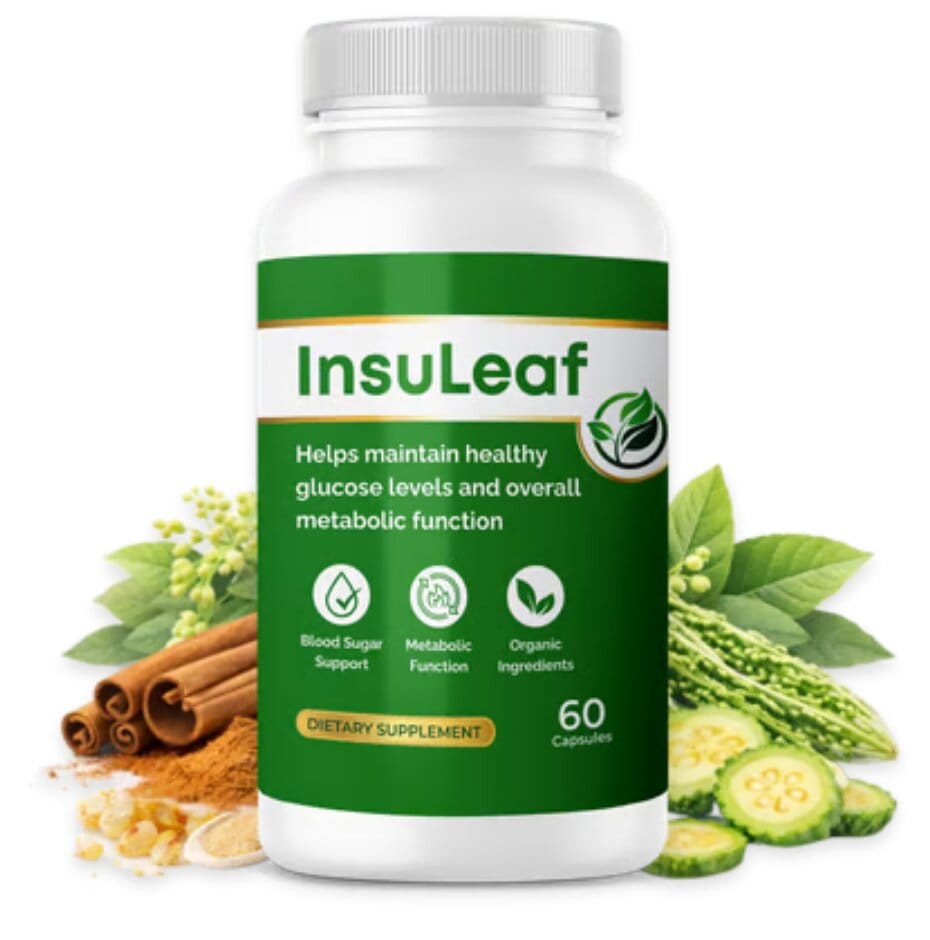
InsuLeaf’s key ingredients typically include Chromium, Banaba Leaf, White Mulberry Leaf, Gymnema Sylvestre, Bitter Melon, Alpha Lipoic Acid, Cinnamon Bark, Taurine. That’s the core “stack.”
My baseline before day 1 (so the 30 day notes make sense)
I’ll be honest about my starting point because otherwise the 30 day notes don’t mean anything.
My starting point
- Diet: Pretty normal, not terrible, not perfect. I eat protein but I’m not strict. I’ll do eggs or yogurt in the morning, then lunch is usually something rice or bread adjacent, and dinner varies. I do snack. I do dessert sometimes. I’m not keto, not low carb, not vegan. Just regular.
- Carb frequency: Daily. Not huge portions, but consistent.
- Sleep: This is the annoying part. Sleep was decent but not locked in. Some nights 7.5 hours, some nights 6, sometimes stress makes it lighter.
- Stress: Moderate. Not crisis level, but enough that I notice it in cravings.
- Activity: Light to moderate. A few walks, some basic workouts, but nothing intense.
What I wanted to improve
My main issues were:
- Afternoon energy dips.
- Random sugar cravings that felt out of proportion to hunger.
- That post meal slump when I eat carb heavy meals.
Not medical treatment goals. Just quality of life stuff.
What I tracked
I tracked:
- Energy and focus (subjective, but daily).
- Cravings (how intense and how often).
- Meal patterns (especially carb heavy meals).
- Post meal feelings (sleepy, fine, snacky, etc.).
I did not use a CGM for this review. If you do, you’ll get better data. But also, CGM data can make people anxious, so it’s a tradeoff.
What stayed constant
I tried to keep things steady:
- No major diet overhaul.
- Caffeine stayed consistent.
- Similar activity routine.
- I didn’t stack multiple “blood sugar support” supplements at the same time.
Because otherwise you have no idea what did what.
How I used InsuLeaf for 30 days (dosage, timing, routine)
InsuLeaf’s typical dosage is 2 capsules daily with water. That’s what I followed.
Timing
I experimented a little in the first week because timing matters.
- Taking it with meals felt easiest on my stomach.
- Taking it before a carb heavy meal seemed to make the most sense logically, since some ingredients (like white mulberry) are often used for post meal support.
I eventually settled into a simple routine:
- 1 capsule with lunch
- 1 capsule with dinner
Mostly because lunch and dinner are when carbs show up for me. Breakfast is sometimes lighter.
Why timing might matter (without overpromising)
Some ingredients in these formulas are often positioned around:
- Supporting how carbs are broken down.
- Supporting post meal glucose handling.
- Reducing the “crash” feeling that can follow a big glucose swing.
So if someone takes it randomly at bedtime and expects it to fix the next day’s cravings, that’s… not how most of these supplements are intended to work.
Common usage mistakes I noticed people make
From reading around and honestly from my own habits too:
- Inconsistent dosing. Taking it 3 days, skipping 4.
- Taking it on an empty stomach if you’re sensitive.
- Expecting instant changes in 48 hours.
- Stacking multiple similar products (chromium here, berberine there, plus a “glucose tea”) and then not knowing what caused side effects or benefits.
How I integrated it with lifestyle (basic but important)
I didn’t do anything extreme, but I did keep a few simple habits because they matter a lot more than people want to admit:
- Protein and fiber at meals when I could.
- Hydration. Boring, yes.
- A short walk after dinner a few times a week.
Even 10 minutes helps post meal comfort.
Insuleaf@Money Back Guarantee
What I noticed after 30 days (the honest results)
Here’s the part everyone actually cares about.
I’ll do it week by week, because the first few days can be misleading. New supplement energy is a thing. Placebo is a thing. Also, sometimes nothing happens early.
Week 1
Week 1 was mostly… quiet.
- Cravings: Slight reduction, but it was subtle. I still wanted sweet stuff, it just felt less urgent.
- Energy: No dramatic change. I still had at least one afternoon dip, especially after a heavier lunch.
- Digestion: Fine overall. No major GI issues. One day of mild stomach weirdness when I took it without much food, so I stopped doing that.
If I’m being strict, week 1 could easily be placebo. Or just normal fluctuation. I wouldn’t judge InsuLeaf based on week 1 alone.
Week 2 to Week 3
This is where I started noticing a pattern.
- Cravings: More noticeably calmer. Not gone. But it felt easier to say “no, later” and move on. Especially at night.
- Energy: The post lunch dip felt less intense on days when my lunch wasn’t a total carb bomb. If I ate something like rice plus protein, I felt steadier than usual. If I ate something like a big sandwich and chips, I still felt it.
- Appetite: Slightly more stable. I wasn’t hunting snacks as aggressively.
The big theme here was variability. InsuLeaf didn’t cancel out bad meal choices. It seemed more like it supported decent choices.
Week 4
By the end of 30 days, my overall impression was:
- Most meaningful change: fewer sugar cravings and less emotional “need” for snacks.
- Second best change: slightly steadier energy, especially less dramatic post meal crash on average.
- What didn’t change: I didn’t see anything like dramatic weight loss, and I wasn’t trying to. My sleep and stress still dominated how I felt. If I slept badly, no supplement fixed that.
What I didn’t see (boundaries)
Just to be super clear:
- I did not see a miracle body transformation.
- I did not see a “blood sugar cure.”
- I did not suddenly feel like I could eat unlimited sugar with no consequences.
If your goal is a medical outcome, you need medical care. Period.
Who might experience more or less benefit
Based on my experience and the general way these ingredients work, I think benefit is more likely if:
- You already eat somewhat balanced meals but struggle with cravings.
- You have predictable post meal slumps.
- You’re willing to take it consistently for a few weeks.
Less likely if:
- Sleep is chaotic and stress is high (that tends to drive cravings hard).
- Diet is very high sugar and very low protein/fiber.
- You expect immediate results.
How InsuLeaf works (the multi pathway idea in simple terms)
This is the logic behind multi ingredient blood sugar supplements. They don’t try to do one thing. They try to support multiple points in the process.
Pathway 1: insulin sensitivity and glucose transport support
Ingredients like chromium and alpha lipoic acid are often included because they are associated with insulin signaling support and metabolic pathways involved in glucose handling.
You’ll sometimes hear this described as “helping glucose get into cells” more effectively. That’s a simplification, but it points in the right direction.
Pathway 2: carbohydrate digestion modulation
Botanicals like white mulberry leaf are often used in formulas designed around post meal support. The idea is that if carbohydrate digestion is slowed a bit, the post meal spike can be less sharp.
Again, not a promise. Just the design logic.
Pathway 3: oxidative stress and inflammation angle
This part always sounds fluffy in supplement ads, but oxidative stress is discussed in metabolic health research for a reason. Blood sugar swings can create metabolic stress. Antioxidant support ingredients (ALA is one example) are included partly for that.
Bioavailability matters
This is a big one people skip.
- The form of chromium matters (chelated forms are often used).
- Extract standardization matters for botanicals like banaba (corosolic acid) and mulberry.
Two products can have the same ingredients on paper and still feel different because of forms, doses, and extract quality.
The expectation reality check
Supplements support physiology. They do not replace:
- diet
- prescribed medications
- sleep
- movement
Those do the heavy lifting. Supplements are more like the small assist that makes the bigger habits easier to maintain.
Ingredient breakdown: what each component is doing (and what evidence usually shows)
I’m not going to pretend this is a clinical trial. But we can talk about what these ingredients are generally used for, and what the research usually evaluates.
Chromium Picolinate (especially chromium amino acid chelate)
Chromium is one of the most common “glucose metabolism” ingredients. It’s involved in insulin signaling pathways and is often studied in relation to insulin sensitivity.
A few practical notes:
- People who are deficient might notice more benefit than people who already get enough.
- Dosing matters, and more is not always better.
- If you are on diabetes meds, chromium containing formulas are a “talk to your clinician” situation.
Banaba leaf (corosolic acid association)
Banaba is usually included for post meal support and overall glucose balance positioning. Standardized extracts matter here because corosolic acid is often the compound referenced in studies.
What I’d look for in a label:
- Does it specify extract details or standardization?
- Is it just “banaba leaf powder” or an actual extract?
White mulberry leaf
White mulberry is commonly discussed in the context of carbohydrate digestion enzymes and post meal glucose response. That’s why timing with meals comes up.
It’s one of those ingredients where you’re not necessarily “feeling” it directly. The effect, if it happens, is more like less crash later.
Gymnema sylvestre
Gymnema is often used in formulas for cravings and sugar handling. Some people talk about it like it reduces “sweet taste” perception, but that varies and depends on the form and dose.
In practical terms, it fits the cravings and appetite stability angle.
Bitter melon
Bitter melon shows up in a lot of traditional metabolic health approaches and modern supplements. It’s included for cellular glucose uptake support and insulin sensitivity positioning.
Some people get GI upset from bitter melon products. I didn’t, but it’s worth noting.
Cinnamon bark
Cinnamon is one of the most overhyped ingredients in this space, but it’s also popular for a reason. It’s often included for glucose utilization support. The type and dose matter, and the research is mixed depending on the form used.
I treat it as supportive, not primary.
Alpha lipoic acid (ALA)
ALA is an antioxidant involved in mitochondrial and metabolic pathways and is often discussed in relation to insulin sensitivity and oxidative stress support.
It’s one of the more “serious” ingredients in the sense that it shows up in actual clinical discussions, but again, dose and context matter.
Taurine
Taurine is an amino acid involved in cellular function and metabolic wellness. In glucose support stacks, it’s usually there as supportive infrastructure, not the headline ingredient.
Why multi ingredient vs single ingredient matters
A multi ingredient formula can be helpful because it covers multiple angles at once. The downside is you can’t easily pinpoint what did what.
If you want a clean experiment, a single ingredient approach (like chromium alone) is simpler. If you want broad support and you tolerate botanicals well, a stack can make sense.
Quality, manufacturing, and label trust: what to verify before buying
This category matters more than the average person thinks, because the supplement industry has both great companies and very sketchy ones.
Here’s what I look for.
Manufacturing standards checklist
InsuLeaf is positioned as made in the USA in facilities that are:
- GMP certified (Good Manufacturing Practices)
- FDA registered facilities
Important: FDA registered does not mean FDA approved. It mainly means the facility is registered and subject to certain regulations. GMP is a baseline quality standard, not a guarantee of excellence. But it’s better than nothing.
Third party testing
Ideally you want third party testing for:
- purity and potency
- heavy metals
- microbial contamination
If a company provides a COA (certificate of analysis) on request or makes it accessible, that’s a green flag. If they refuse to share anything, it’s not an automatic deal breaker, but it lowers trust.
“Pharmaceutical grade botanical extracts” and “non GMO, gluten free”
These are marketing phrases unless they are backed with documentation.
- Non GMO can be validated with supplier documentation or certification.
- Gluten free should be validated with allergen controls and testing protocols, especially if you’re sensitive.
FTC and FDA rules basics (red flag claims)
Supplements cannot legally claim to treat, cure, or prevent disease. If you see:
- “Reverses diabetes”
- “Replaces insulin”
- “Guaranteed to lower blood sugar in 24 hours”
That’s a red flag. Even if the product is decent, the marketing is telling you the company is willing to cross lines.
My take on transparency
What I want from a label:
- clear serving size (InsuLeaf’s typical is 2 capsules daily)
- clear ingredient list with forms if relevant
- contact details and support email (InsuLeaf lists support@insuleaf.com)
- clear return policy and guarantee terms
If I can’t find those, I don’t buy.
Customer reviews reality check (Trustpilot, Reddit, Quora, Facebook, X, TikTok, Instagram)
I looked through reviews across platforms because no single site tells the full truth.
But also, reviews are messy. People exaggerate. People affiliate promote. People hate review. People blame supplements for things that were already happening. So you have to read like a detective.
How to read reviews without getting misled
I trust reviews more when they include specifics:
- how long they took it (3 days vs 3 weeks is huge)
- dose and timing
- what their baseline diet or lifestyle was like
- what they actually noticed (cravings, energy, post meal comfort)
I trust reviews less when they are:
- pure hype with no details
- written like an ad
- full of extreme promises
Platform by platform tendencies
- Trustpilot: can skew positive or negative depending on who bothers to post, and whether purchase is verified.
- Reddit: more skeptical, but also very anecdotal. Also some people are just anti supplement across the board.
- Quora: lots of SEO style answers. Sometimes helpful, often generic.
- Facebook groups: community effect is real, people mirror each other’s excitement or frustration.
- X, TikTok, Instagram: short form promos, lots of affiliate content, not much nuance.
Common positives people report
Across platforms, the more believable positives were consistent with what I noticed:
- fewer cravings
- steadier energy
- feeling better after meals
Common complaints
Also consistent across platforms:
- no effect (especially within the first 1 to 2 weeks)
- GI upset (botanicals can do that)
- shipping or billing confusion (this is usually a “buy from the official site and read the checkout carefully” issue)
How I score review credibility
If multiple platforms say the same thing, in similar language, with different writing styles, that’s more believable. If it’s all the same buzzwords, I assume affiliate content.
Consumer Reports lens (even if not covered)
Consumer Reports tends to care about label accuracy and testing. Even if they haven’t reviewed InsuLeaf specifically, you can apply that mindset:
- Do the claims stay within supplement rules?
- Is the label detailed?
- Is there evidence of quality control?
It’s a good way to stay grounded.
Side effects, interactions, and safety considerations
I didn’t have major side effects. But that doesn’t mean you won’t.
Potential side effects
Common supplement side effects in this category can include:
- GI discomfort (nausea, bloating, loose stool)
- headaches (sometimes from changes in appetite, hydration, or blood sugar patterns)
- changes in appetite or energy that feel weird at first
Most of the time, if someone reacts, it’s in the first week.
Medication interactions (important)
If you are on:
- diabetes medications
- insulin
You need clinician oversight. Combining glucose lowering meds with a supplement that supports glucose metabolism can increase hypoglycemia risk. That is not theoretical.
Also ask about interactions if you take:
- blood thinners
- blood pressure meds
Special populations
Avoid or get clinician guidance if you are:
- pregnant or breastfeeding
- under 18
- managing chronic disease (especially liver, kidney issues)
Safety best practices
- Take with food if you are sensitive.
- Track changes for the first 2 weeks.
- Stop if you notice adverse effects.
- Don’t stack three similar products at once.
When to seek medical help
If you experience severe symptoms like fainting, confusion, severe weakness, allergic reaction signs (swelling, hives, breathing issues), seek medical help and report the adverse event. In the US, you can report supplement issues through FDA MedWatch.
Pricing, packages, and guarantee: is it worth it after 30 days?
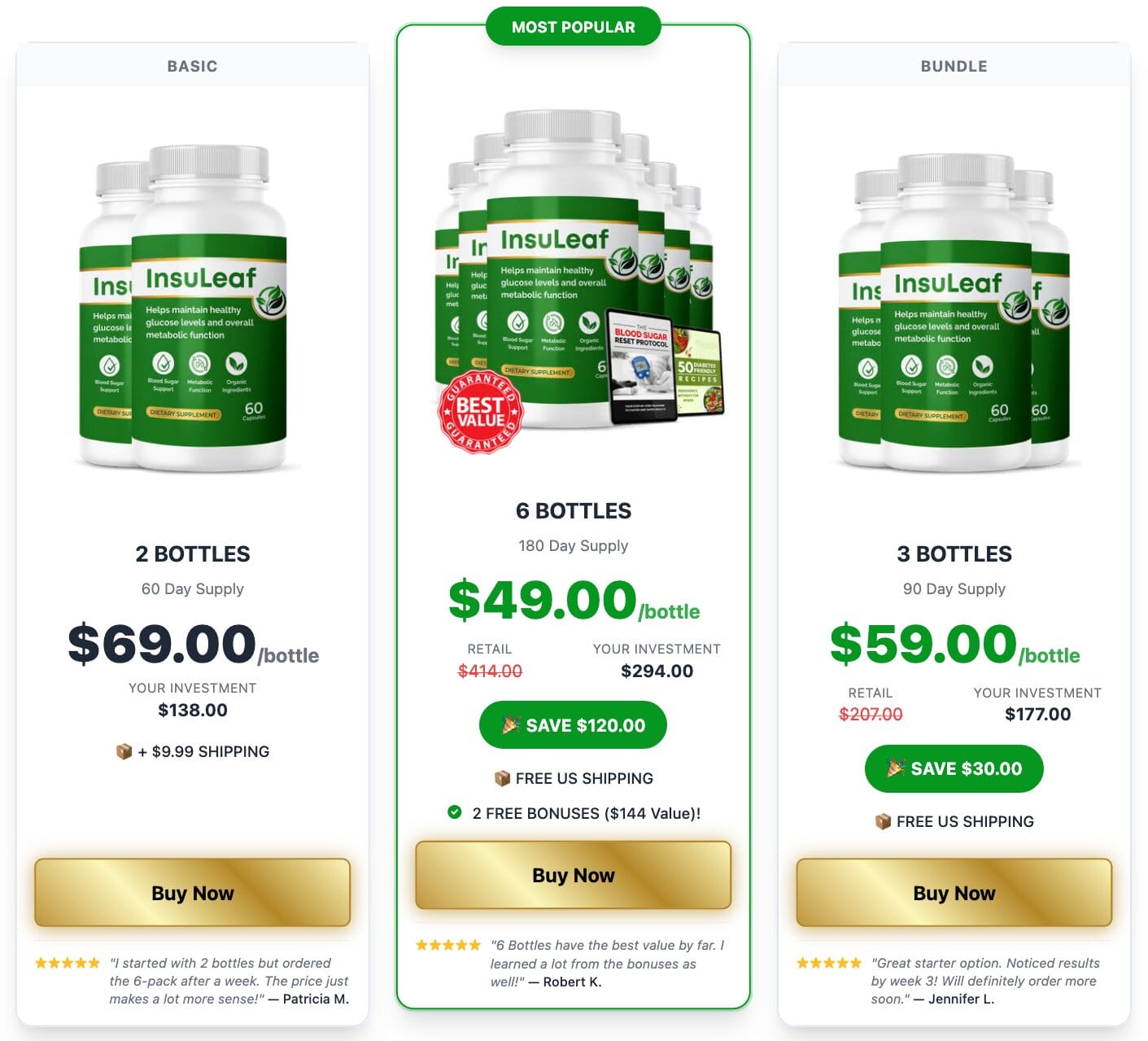
InsuLeaf is usually priced like a premium supplement, not a cheap drugstore bottle.
From the info available, pricing often looks like:
- Higher cost per bottle if you buy one.
- Bulk packages offer better value per bottle.
- Mentioned price point is around $49 per bottle in larger packages (pricing can change, so always confirm at checkout).
Guarantee
InsuLeaf is typically sold with a 60 day money back guarantee.
What I always check:
- Is it 60 days from order date or delivery date?
- Do you need to return empty bottles?
- Who pays return shipping?
- Is there a restocking fee?
A guarantee is only as good as the actual return process.
Hidden cost checklist
Before you hit buy:
- Watch for subscription or auto ship toggles.
- Confirm shipping cost, especially international.
- Check customs fees if you’re outside the US.
- Save the support email and order confirmation.
My value judgment framework
To decide if it’s worth it, I’d weigh:
- ingredient breadth (this is a multi ingredient stack)
- manufacturing standards (GMP, facility info)
- your results (cravings, energy, post meal comfort)
- the cost per day
For me, after 30 days, it felt like a “maybe, depending on budget” product, not an automatic forever supplement.
Where to buy InsuLeaf safely (and avoid fakes)
If you buy supplements like this often, you already know the issue.
Marketplaces can have counterfeits, expired stock, or bottles stored in heat. Even if the listing looks legit.
Safest sourcing
- The official InsuLeaf website is the safest route.
- Authorized sellers, if clearly listed by the brand.
I would personally avoid random third party listings unless I could verify authorization.
Authenticity checks
When the bottle arrives:
- Check for lot numbers and seals.
- Confirm the label matches the official ingredient list.
- Make sure the expiration date is clear.
- Confirm the return policy and contact info are present.
If the company offers COAs and you care enough, request one.
Shipping and storage basics
Botanicals and vitamins do not love heat.
- Don’t leave the bottle in a hot car.
- Store it in a cool, dry place.
- If your package arrives hot and the capsules smell off, take photos and contact support.
What I would do if I received a questionable bottle
- Don’t take it.
- Document with photos.
- Email support (support@insuleaf.com is listed).
- Request a replacement or refund.
- If purchased through a marketplace, file a report and return.
How InsuLeaf compares to other blood sugar supplements (formula design, not hype)
There are a lot of products in this category. Some are basically cinnamon plus chromium. Some are a kitchen sink formula.
Here’s how I’d compare them in a way that actually matters.
Comparison criteria that matter
- Ingredient transparency (do they list forms and amounts clearly)
- Evidence backed actives (chromium, ALA, banaba, mulberry, gymnema, bitter melon)
- Bioavailability (chelated minerals, standardized extracts)
- Third party testing
- Manufacturing standards
- Guarantee and customer support
InsuLeaf vs common alternatives (like GlucoTrust, Sugar Defender)
I’m not going to do the corny “this DESTROYS that” thing.
In general, InsuLeaf’s positioning is a multi pathway formula with a pretty classic set of glucose support ingredients. Some alternatives lean harder into branding, sleep, appetite, or “detox” language. Some use fewer actives but at potentially simpler, clearer doses.
So the difference often becomes:
- Do you want a broad stack (InsuLeaf style), or
- Do you want a simpler blend that targets one main goal.
Who should choose a simpler single ingredient approach
If you are very sensitive, on multiple meds, or just want to run a clean experiment, starting with something simple (like chromium alone, or just a fiber first approach) can make more sense.
If you tolerate supplements well and want broader support, a stack can be convenient.
Bottom line on choosing
Pick based on your main goal:
- Cravings: gymnema plus overall stability habits.
- Post meal stability: mulberry, meal timing, walking after meals.
- Antioxidant support: ALA angle.
- Budget: cost per day and whether you will actually take it consistently.
My final verdict after 30 days (and how I’d use it going forward)
After 30 days on InsuLeaf, the honest recap is:
- My sugar cravings felt calmer and less bossy.
- My energy felt a bit steadier, especially after meals, but not bulletproof.
- No dramatic changes beyond that, and I wasn’t expecting any.
Who I’d recommend InsuLeaf to
- People who want metabolic wellness support and are realistic about supplements.
- People who struggle with cravings and mild post meal crashes.
- People willing to take it consistently for at least 3 to 4 weeks and track what changes.
Who I wouldn’t recommend it to
- Anyone looking for a “blood sugar cure” product.
- People on diabetes meds or insulin without clinician oversight.
- People who don’t tolerate botanicals well, or who get GI upset easily, unless they’re ok experimenting cautiously.
- Anyone on a tight budget who will resent the cost and stop after 10 days.
If I were continuing
I’d keep it simple:
- Use it in 30 day blocks.
- Track cravings, energy, and post meal crash patterns.
- Reassess monthly.
- If I stop noticing benefit, I’d stop taking it.
And the boring but real reminder. Supplements are adjuncts. The foundation is still nutrition, movement, sleep, and clinician guidance if you’re dealing with medical blood sugar issues.
That’s the whole game. InsuLeaf, at least for me, was a decent assist. Not a replacement for the basics.


